- Services
- Metals (overview)
- Plastics (overview)
- CAD Design
- Rapid Prototyping
& Rapid Tooling - CNC Machining
- Finishing & Assembly
- Rubber Plaster Molding
- Precision Airset Sand Casting
- Graphite Mold Die Casting
- One-Shot Casting
- Reaction Injection Molding (RIM)
- Rapid Injection Molding
- Design for Manufacturability (DFM)
Technical Information: Plaster Mold Process
Download the PDF version of this document
What is Plaster Mold Casting?
Plaster mold casting, also called rubber plaster molding (RPM), is a method of producing aluminum or zinc castings by pouring liquid metal into plaster (gypsum) molds.
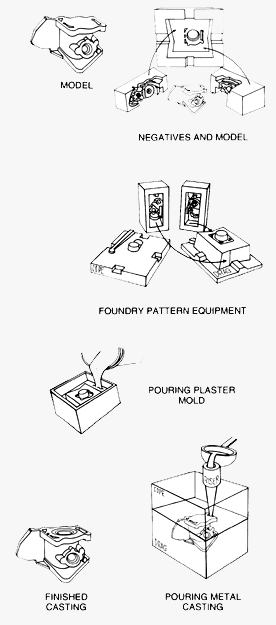
Step 1: Model or Master Pattern
- Constructed from customer drawing or CAD file.
- Stereolithography, traditional hand crafted or machined.
- Model is engineered to include:
A) Metal shrinkage.
B) Mold taper (if required)
C) Machine stock (if required). - We can "clone" or adapt customer supplied model if requested.
Step 2: Foundry Pattern Equipment
- Negative molds are made from model.
- Core plugs are made from negative molds.
- A positive resin cope and drag pattern is now made from the negative molds.
- Core boxes are made from the core plugs
- Gating, runner system and flasks are added as necessary.
- Duplicate sets of tooling can be made from the master negative.
Step 3: Plaster Mold
- A liquid plaster slurry is poured around the cope and drag pattern and into the core boxes.
- The plaster mold is next removed from the cope and drag patterns.
- The plaster mold and cores are then baked to remove moisture.
Step 4: Pour Casting
- Molten metal is prepared by degassing, and a spectrographic sample is taken to check the chemical analysis.
- The molten metal is then poured into the assembled plaster mold.
- The plaster is removed by mechanical knock-out and high pressure waterjet.
- When the casting has cooled, the gates and risers are then removed.
Step 5: Secondary Operations
- The raw castings are inspected and serialized.
- Castings may then require (per customer specifications):
A) Heat treatment
B) X-Ray
C) Penetrant inspection - After finish inspection, casting is ready for:
A) Machining
B) Chemical film, chromate conversion, paint
or special finishes
C) Assembly
D) Form-in-place gasketing.
Download the PDF version of this document